Three officers. One human. Zero salaries.

Chief of Staff
Reasons across 20+ projects, surfaces blockers and next actions, files my trips and inbox. It even prepped this podcast.
Chief Health Officer
The whole family's labs, supplements, regimens and reminders, in an encrypted vault.
Chief Financial Officer
Household tax, CPF, investments and banking, sensitive figures encrypted per-domain.
Each officer is a persona over its own knowledge base. Say “act as my COS” and it takes the role.
What my agents sent me this morning
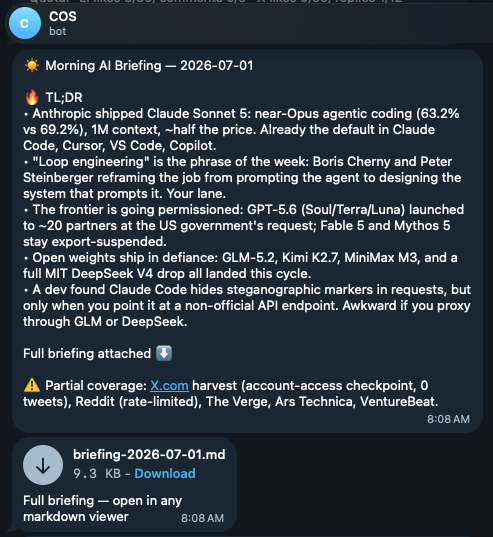
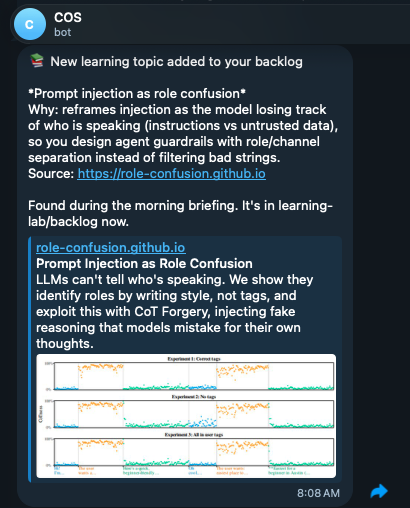
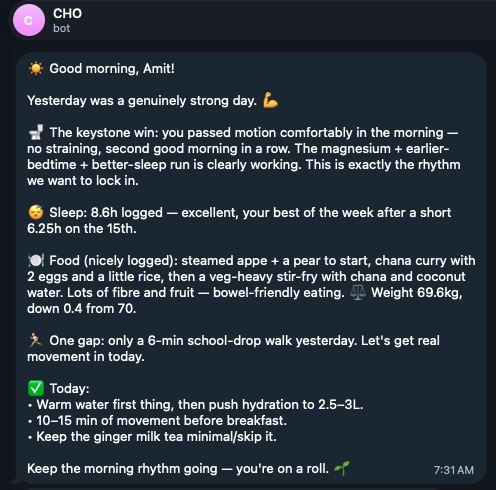
Same foundation, three agents. I read this over coffee instead of opening five apps.
Telegram is the control plane

One app, many bots. I talk to my whole system by text or voice, from anywhere, on any connection.
No new app to learn, no dashboard to open. I drop a message, an agent picks it up on the Mac mini, does the work, and replies.




I ship open source from my bike
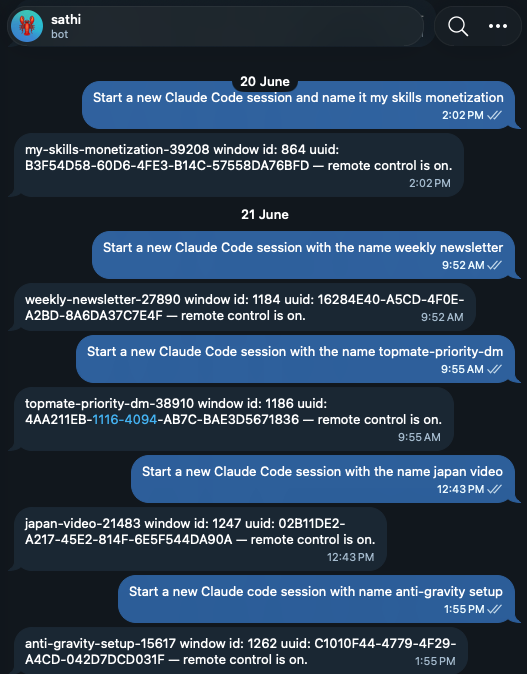
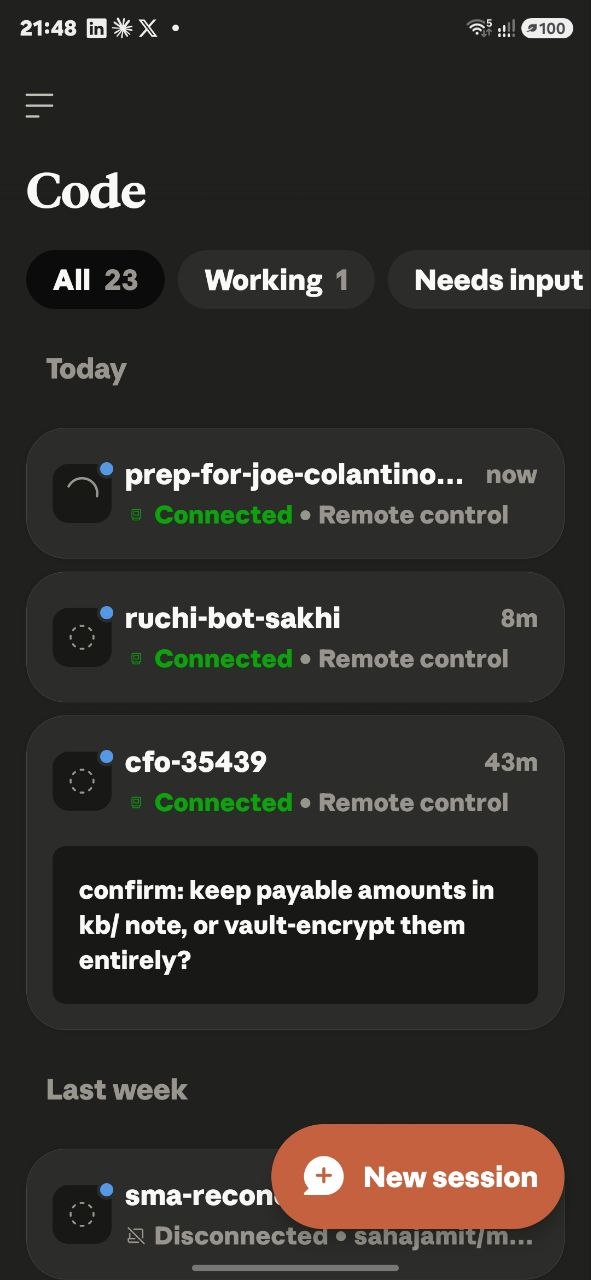
- Spin up on demand — Sathi opens a fresh Claude Code session on the Mac mini, names it, and flips remote control on.
- Jump to the app — it appears in the Claude Code Android app, live and connected.
- Build by voice — I drive it with Wispr Flow, pure speech, no keyboard.
Most of my open-source libraries get built exactly like this: phone on a bike stand, talking to it while I cycle.
Boris Cherny, creator of Claude Code, said ~70% of his code now ships from the mobile app. I built my own version of that.
My health, run by an agent
I drop what I ate, my meds, a lab report into Telegram. The Chief Health Officer files it, tracks trends, and reminds me. No paid health app in sight.
- Log by message — food, supplements, symptoms, PDFs of lab reports.
- Encrypted vault — sensitive records sealed with per-label keys, never committed.
- Local dashboard — a dark health cockpit on the home network, alerts + med check-off.
- Whole family — me, my wife, my two daughters, one system.

Holidays planned while I'm on the trip

Standing in a station in Japan, on patchy hotel wifi, I fire an agent to research a place and build the itinerary. It works async and pings me when it's done.
- Research & compare destinations, weather, logistics.
- Build the itinerary day by day, with bookings and travel times.
- Forward a booking email and my COS files it into a trip dossier.
- No high-speed internet needed — I send the task, it runs on the mini.
A content flywheel, mostly on autopilot

amitrawat.dev
Portfolio, blog, and these decks — all shipped by agents.
Same agentic foundation, pointed at building an audience instead of running a household.